PG Paper: Supporting Charities and Communities Worldwide

PG Paper: Supporting Charities and Communities Worldwide

With charity being so close to the hearts of PG Paper CEO’s Dr Poonam Gupta OBE and Puneet Gupta OBE, it’s important that as a company we stay committed by working with great causes and donating when possible.

The developed world has more than sufficient financial resources to support the world’s poorest. This can be without compromising on its own educational and healthcare programs. This is why supporting and partnering with numerous local and international charities has been a cornerstone of PG Paper’s company mission since its beginning in 2003.

Local and International Charities

At PG Paper, our team have worked closely with many non-profit organisations in the UK and across the globe. This includes Action for Children Scotland, Scottish Circle, Oxfam’s South Asian Campaign. Internationally, we have worked with medical charities in India, Pardada Pardadi Educational Society (PPES) and the Elephant Family charity.

The Oxfam South Asian Campaign strives to combat extreme violence against women in developing Asian countries. The Scottish Women’s Circle collaborated with British entrepreneurs, like Poonam, to create this campaign in order to help Asian women find their voice.

Action for Children Charity Night

One of the main charities that Poonam and Puneet have worked with is Action for Children. This charity has achieved wonderful things for disadvantaged children of all ages and walks of life. In June 2017, an Action for Children dinner was hosted and sponsored by PG Paper in the Glasgow Hilton. The night raised a sum of £108,000 for the charity.

Action for Children


Travels to my Elephant

Back in 2015 and 2017, Poonam and Puneet travelled across the world to India to take part in the Travels to my Elephant Rickshaw Race. These events were organised by the Elephant Family and centered around raising awareness and money for the Asian Elephant’s plight. During their trips to India, they also visited orphanages, helping children that were in need of support and education.

Recognising Achievements

Due to their exceptional efforts in business and charity, Poonam and Puneet Gupta were named the Number One Power Couple in community affairs by Asian Power Couples Top 100.

Our values are crucial to the way we work. Recognising the progress and contribution is important to reflect how far we’ve come as a company. As global paper suppliers, we value the importance of strong relationships, community building and harnessing our core beliefs in our day-today. These key factors are vital to our growth as a business and as individuals.

PG Paper’s Journey

There are many inspiring stories behind building an international business from the ground up. PG Paper take great pride in our corporate social responsibility initiatives, charitable efforts and dedication to environmental sustainability.

The Things You Take for Granted About Paper – Poonam and Puneet Gupta

The Things You Take for Granted About Paper – Poonam and Puneet Gupta

We use paper in countless ways every day, often without a second thought. From the packages that arrive at our doorsteps to the documents we print at work, paper is a constant presence. But behind each sheet or cardboard box lies an intricate global journey that we often overlook. At PG Paper, Poonam and Puneet Gupta share insights on the hidden complexities of the paper industry and how this everyday material plays a vital role in shaping our world.


The Journey of Paper: Global Reach in a Simple Sheet

People think of paper as something local, but it’s a truly global product; The fibers in your packaging might come from a forest thousands of miles away, only to end up at your doorstep. It’s fascinating how something so simple has such an international journey – Puneet Gupta

The Hidden Engineering of Everyday Paper

Paper seems simple, but the precision behind its production is impressive. From determining the perfect thickness for packaging to ensuring paper can absorb ink evenly, it’s a carefully engineered product.

Most people don’t realize that making paper is as much a science as an art. We’re constantly adjusting processes to meet the specific needs of our customers. Whether it’s for packaging, printing, or specialty papers, there’s a lot more to the production process than meets the eye – Poonam Gupta

The Environmental Commitment You Don’t See

While sustainability is often talked about, what many don’t see is the effort that goes into making the entire paper lifecycle more eco-friendly. This goes beyond recycling to responsible sourcing and minimizing energy consumption in production.

What’s overlooked is the work being done to ensure that the paper industry can be both sustainable and innovative at the same time. It’s not just about recycling; it’s about rethinking how we produce paper in ways that benefit both the environment and our customers – Puneet Gupta

Packaging: The Essential but Overlooked Hero

Packaging isn’t just about protecting goods. It’s about functionality, safety, and creating a better experience for consumers. PG Paper is constantly innovating with packaging solutions to ensure that products arrive safely, but also to meet sustainability goals.

Think about how much packaging has evolved, even in the last few years. “We’ve moved beyond just using paper to protect items—it’s about creating packaging that enhances the customer experience while still being conscious of our environmental footprint. Whether it’s tamper-proof designs or eco-friendly materials, there’s a lot more behind the box than people realize – Poonam Gupta

The Evolution of Paper in a Digital World

Even in the age of digital everything, paper hasn’t lost its relevance. It has evolved, from being a medium for communication to playing a key role in sectors like packaging, hygiene, and specialty products.

People might think paper is a dying industry, but it’s adapting in incredible ways .From smart packaging to sustainable innovations, the paper industry is evolving to meet the needs of modern businesses and consumers. It’s about embracing new challenges with a material that’s been around for centuries – Puneet Gupta

The Future of Paper: Continuous Innovation

The future of paper is anything but static. From experimenting with biodegradable alternatives to creating lighter, stronger packaging materials, PG Paper is looking at how paper can continue to solve the challenges of tomorrow.

What excites me is how paper continues to surprise us. There’s always a new application, a new material, or a new way of thinking about it. At PG Paper, we’re focused on staying ahead of those innovations and making sure we’re offering solutions that work not just for today but for the future – Poonam Gupta

Conclusion: More Than Just Paper

Next time you interact with paper – whether it’s in a book, a package, or a receipt – take a moment to appreciate the journey it’s been on and the innovations that make it possible. From the unseen global networks that bring it to life to the cutting-edge techniques that make it sustainable and functional, there’s a lot more to paper than meets the eye.

Working Towards a Multicultural Scotland by Championing Diversity

Working Towards a Multicultural Scotland by Championing Diversity

Scotland’s ethnic minorities, those who identify as any ethnic group other than “white Scottish”, has grown significantly in size over the past 10 years, representing 850,000 people or 16% of Scotland’s residents. This shouldn’t be too surprising: for centuries, Scots travelled the world, settling in America and Canada, Australia, India, China, and across Europe. There are 50 million people around the globe today who claim Scottish ancestry, so just as Scots left their home to travel to new lands, so too are others choosing to settle in Scotland.

As the son of immigrants myself, I’ve made it a point to educate others on the value of greater ethnic diversity, from my efforts to create an inclusive culture at PG Paper to my diversity work. Wherever I am, the goal remains the same: to demonstrate the benefits of a more diverse Scotland and how we can help new immigrants become integrated into Scotland and its culture.

What Are The Benefits of Diversity in Scotland?

There are several benefits that come with bringing more diversity and multiculturalism to Scotland. For one, it promotes tolerance and understanding between different cultures, which along with being positive on a social level, it’s also a positive for businesses as it encourages and promotes cultural integration and the sharing of one’s ideas and perspectives. This sharing and openness can lead to new innovations for businesses together with open-mindedness, collaboration and teamwork.

A diverse workforce can provide companies, especially those operating internationally, with a distinct competitive advantage. Employees with different cultural backgrounds make it easier to communicate globally and increase a company’s understanding of their customers’ cultures and environments.

In an increasingly competitive business environment, recruiting globally increases your talent pool.  In PG I have found that having a culturally diverse team has been a draw in both attracting and retaining the best talent to our company, with research showing culturally diverse organisations enjoy greater employee satisfaction.  It also helps us better understand and focus on our customers, their cultures and needs. Having diverse cultures and backgrounds in our team leads to greater creativity.

On top of this, promoting cultural diversity helps to enrich our communities through shared experiences with different people, promoting empathy and a willingness to learn, good traits to have for a country with a reputation for innovation.

It’s important we both recognise and work towards breaking down the barriers to employment such as language skills, lack of experience or unrecognised professional qualifications. When my own wife, Poonam Gupta OBE first arrived in Scotland, she found that despite having an MBA in International Business no organisation would employ her because she had no experience. Instead, Poonam started PG Paper from her kitchen table, building it into the multi-award winning business it is today.

Three Forms of Integration

When people talk about immigrants becoming integrated into their new homes, they’re usually talking about things like speaking the same language, but there are many different forms of integration to consider. If we want to create a more diverse Scotland, we need to make it easier for people to achieve these forms of integration, as it will help them feel more a part of the wider culture and better position them to contribute to it.

Of the many ways to become more integrated into a culture, three of the most important are economic, political, and social integration.

  • Economic Integration involves access to, and accommodation within, the labour market. Obviously, people aren’t going to be able to contribute if they aren’t given the opportunity to earn a wage and participate in a field. To address this, government’s and organisations need to focus on the provision of specialist training programmes to help people enter the labour market, and review the mutual recognition of qualifications. Organisations should work to encourage and celebrate diversity. At PG Paper, we have an incredibly diverse organisation with staff from across the world and we celebrate each other’s festivals and work to learn more about each other’s cultures and ways of working.


  • Political Integration involves exercising political power through voting, standing in elections, and the right to political organisation. To support this, policies should extend migrant voting rights, encourage representation, and provide funding for migrant groups. This form of integration has been central to my own efforts, working to encourage more people from ethnic minority backgrounds to have a voice and participate in politics. There is no better time for Scotland to strengthen its global connections, working alongside both the Scottish and UK Governments to support trade, collaboration, and a more prosperous economy.


  • Social Integration involves access to social rights, such as health, education and housing, and the development of a feeling of belonging. The type of policies needed here include extending access to public services and programmes to foster community relations. Arguably, a sense of belonging is the key to successful diversion and inclusion efforts. Too often, the discussion of immigrants emphasizes giving up some of one’s identity to be a part of a larger whole, but it is our individuality that brings the greatest value.

Of course, promoting diversity and multiculturalism anywhere comes with challenges, but so long as we approach the process in an authentic way, we can celebrate and learn from our differences and end up in a better place than we started. The most important thing we should remember is that diversity efforts aren’t just about profits and numbers: it’s about the humanity that lies beneath.

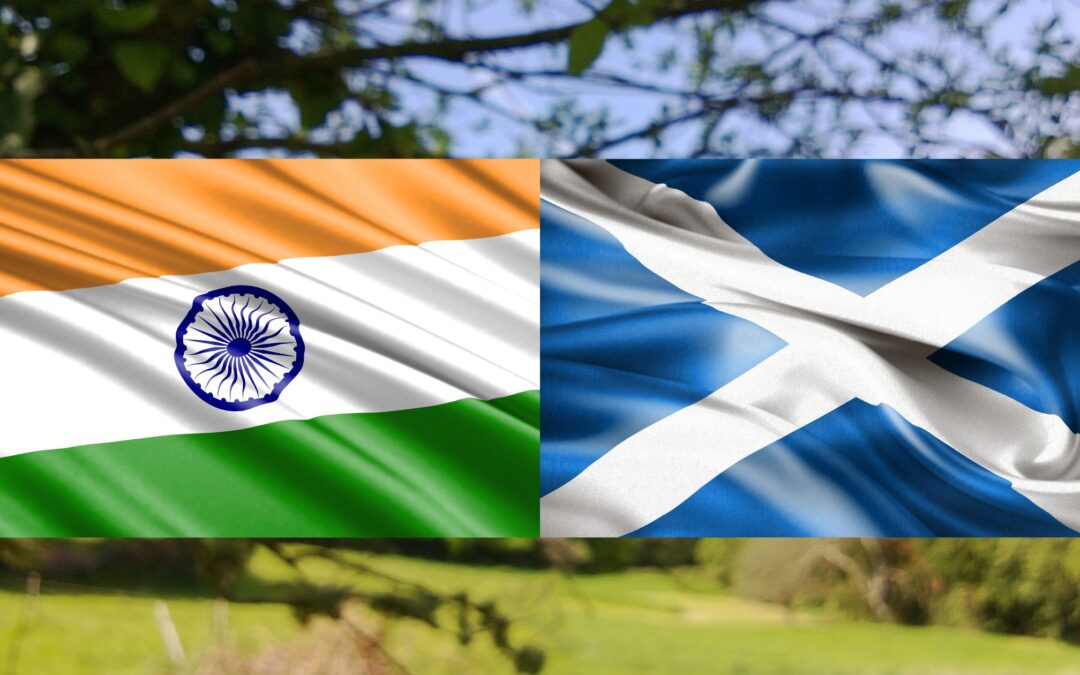
India and Scotland: A Relationship Spanning Four Centuries

India and Scotland: A Relationship Spanning Four Centuries

Being of Indian heritage and having lived in Scotland for the majority of my life, I have experienced first-hand, the long and intertwined history of these two wonderful nations.

Indo-Scottish ties date back nearly four centuries to 1618 when there was a speculative effort to create a Scottish East India Company but it wasn’t until the 1660s, that the Scots began increasing their activity along the trade routes to India, Africa, and China.

By the 18th century, Scottish sailors came to be regarded as reliable seamen and actively engaged in coastal trading in India, trying to find ways to join the Dutch East India Company. It was during this time that Scots began migrating to India in large numbers as East India Company military, medical, and maritime staff and as free merchants.

Today, Scotland is home to approximately 33k citizens of Indian heritage and with Glasgow named “Curry Capital of Britain” more times than any other city in the UK, it is clear that Scots have not only welcomed Indians into their communities but also share a love of Indian cuisine.

India has always been a priority partner for international engagement as Scotland continues on its path of sustainable economic growth, as we at PG Paper know well. Scotland’s strengths in education, energy, and India’s position as the world’s largest democracy, with an unrivalled youth demographic, may allow both countries to achieve their economic goals. In fact, one quarter of the global labour force will be Indian by 2030.  That’s not surprising if you pay attention to India’s young ambitious workforce and the country’s spirit of entrepreneurship and creativity.

Scotland has created an International Framework, with four strategic objectives aligning with India’s priorities:

Objective 1 – Global Outlook: Trade and Investment

This strategic objective of a global outlook underscores Scotland’s ambitions to support more companies to do business in India, increase Scottish exports to India, seek more high-value investments from India into Scotland, and encourage greater talent and knowledge partnership between the two countries.

In a recent interview with the Business Standard, Robert Taylor, a senior spokesman for the Scottish government in Edinburgh, commented: “India is an increasingly important market for Scotland and is identified as one of the top 20 countries for export growth.”

One might be surprised to learn that Indians buy the most whisky in the world. Scotch whisky is a significant attraction for Indian consumers despite the 150% duty on imports by India. In 2021, India is projected to earn over £16 million in revenue from the whisky sold in the country.

India is in fact the eleventh largest inward investor in Scotland, and this could change if the incentives provided by the UK government and India’s economic outlook enhance outward activity on the part of Indian companies. Some of the top Indian companies like TCS, Genpact, Wipro, Hinduja Global Services Limited, and Piramal already have a strong presence in Scotland, and they continue to grow their businesses successfully. We need to see more Indian companies set up their offices in Scotland.

Objective 2 – Relationships and Partnerships: Education and Skills

The partnership between India and Scotland extends to education and skill-building, with demand for education high in India. Scotland is internationally renowned for its leading higher education system and with the promotion and uptake of education a key tenet of Indian culture, this is an increasingly important area for India and Scotland to focus on. Interestingly, India is Scotland’s fifth-biggest international market for further and higher education students, and as of 2016, sixteen of Scotland’s higher education institutes had academic and research links with Indian universities.

This academic partnership is further highlighted by The Edinburgh India Institute at the University of Edinburgh, which aims to encourage a greater awareness of India in Scotland and to build Scotland’s cultural, business and academic ties with India.

Objective 3 – Reputation and Attractiveness: Energy

India’s large population consumes a lot of energy; the Indian government plans to not only generate an additional 175 GW of renewable energy by 2022 but also build a strategy to transition to more sustainable sources of energy.

Since Scotland is well-positioned to partner with India on energy, we need to see greater collaboration between the Scottish and Indian governments on new and renewable energy technology, and on supporting entrepreneurs from India and Scotland to establish energy businesses. One example of this type of partnership is between Global energy consultants Enzen and Glasgow clean energy tech company Smarter Grid Solutions, who were awarded India’s first Active Network Management (ANM) contract.

I’m keen to see how Scotland boosts its profile as a renewable energy powerhouse to economically benefit both countries.

Objective 4 – Culture, Heritage and Tourism

I can’t write about India and not mention Bollywood. Since 1998, over 20 Bollywood films have been shot in Scotland, including the latest blockbuster Bell Bottom. My wife and I were instrumental in facilitating the filming of this movie in Scotland. We convinced the film’s producer Vashu Bhagnani that Scotland offered everything his film needed.

Bollywood is only one aspect of the strong, long-term cultural cooperation between India and Scotland, indeed Scotland’s three largest cities, Glasgow, Aberdeen and Edinburgh, have hosted annual Mela festivals in the past.

The goal is to build greater awareness of Indian culture in Scotland and establish Scotland as a “must-visit, must-return destination” for key Indian tourist markets. Scotland and India’s distinct and diverse cultures and heritage allow infinite opportunities to build lasting partnerships.  For example, Indian tourists are among the world’s highest spenders per trip made abroad. To fulfil our tourism ambitions, we urgently need direct flights between the two countries. I’m hoping the anticipated visit to Scotland from Prime Minister Modi for the UN Climate Change Conference, COP26, will prove to be a great catalyst to explore these opportunities in depth.