Rejuvenating Scotland’s High Streets

Rejuvenating Scotland’s High Streets

Walk through almost any Scottish town centre and the pattern is hard to ignore.

More empty units. Less variety. Fewer independents. And fewer reasons for people to spend time there – even when they want to.

This isn’t about nostalgia for a past era of shopping. High streets are more than retail. They’re economic and social infrastructure, places where communities meet, small businesses grow, and local money circulates.

The challenge is that the economics have shifted faster than the system around them.

The good news? The levers are practical. And they don’t require genius – they require intent.

Here’s what a serious strategy looks like:


1) Make the cost of physical presence fairer

If we want thriving town centres, then operating in them needs to be viable.

That means reforming how we tax and incentivise property so that we:

  • reduce volatility and uncertainty for small businesses
  • reward occupied premises and investment
  • address long-term vacancy more effectively

A healthy high street begins with a system that encourages businesses to open… and stay open.


2) Keep more value circulating locally

Online retail isn’t the enemy. Convenience has changed expectations and that won’t reverse.

But it is worth asking: when spending moves away from town centres, how do we make sure communities don’t lose out entirely?

We should explore mechanisms that ensure value generated from local consumers helps support local places, and that investment is visible on the ground.


3) Make parking an invitation, not a deterrent

Town centres don’t just compete with online. They compete with frictionless retail parks.

If visiting the high street feels expensive or stressful, people will do what people do: choose the easier option.

Short-stay free or subsidised parking, treated as a footfall strategy rather than a revenue line, can often be one of the fastest ways to restore momentum.


4) Back the “circular economy”

Everything here links to one principle:

Money that circulates locally creates more value than money that leaks out.

Independents employ locally, buy locally, and reinvest locally. When they disappear, the whole ecosystem weakens.

A real high-street strategy should focus on keeping towns liveable and investable, not just writing regeneration plans.

High streets won’t fix themselves. But they can be rebuilt, with practical choices, made with urgency, and backed by consistent follow-through.

Because a thriving high street isn’t just good for business.

It’s good for community.

Health, Wellness and Spirituality

Health, Wellness and Spirituality

A personal journey – and the framework I keep coming back to.

In 2016, I had everything on paper. A growing business, recognition, and a life that looked exactly right from the outside. But inside, something was missing. I was externally successful and internally empty – and I suspect more people reading this will recognise that sentence than would ever say it out loud.

This isn’t a reinvention story. It’s a realignment story.

Over time, through trial, failure, and a lot of honest reflection, I realised something that now feels obvious: you can build an impressive life and still feel disconnected from it. And if you’re not careful, that disconnect becomes your normal.

I want to share what I’ve learned. Not as a doctor or an expert, but as someone who made the journey from running on empty to being, genuinely, at peace.


The arc that changed everything

The shift didn’t happen through one dramatic moment. It happened through small decisions repeated over time:

  • coming back to fundamentals
  • learning the difference between achievement and meaning
  • prioritising healthspan, not just lifespan
  • training presence: learning to care deeply, but surrender the need for control

In business we understand compounding – marginal gains, the 1% rule. It turns out the same principle applies just as powerfully to the body, the mind, and the way you experience life.

Over time, that combination brought me to something I value more than status: peace of mind.

This framework isn’t perfect, and it isn’t medical advice. It’s simply what I’ve learned through lived experience, and what I’ve chosen to keep because it works.


Health: the basics that carry everything

Health is not just the absence of disease. It’s the presence of vitality.

Energy. Strength. Clear thinking. Emotional steadiness. Recovery.

And the truth is, most people already know what to do – they just struggle to do it consistently. That’s why I stopped looking for complicated answers and started building a foundation.

For me, health came down to one decision:

The decision to get healthy comes from you.

Not from pressure. Not from trends. Not from fear. From ownership.

So I built around four fundamentals:

S.H.E.D. – Sleep, Hydration, Exercise, Diet

Not glamorous, but completely transformational when you do them properly:

  • Sleep: consistency beats intensity. Regular times, a wind-down routine, and protecting sleep like it matters – because it does.
  • Hydration: not just water; replenishment. If you’re depleted, your body tells you in ways you’ll misread as stress or fatigue.
  • Exercise: daily movement and strength. Muscle isn’t vanity – it’s insurance for the future.
  • Diet: protein and plants first; less refined food; fewer empty carbs; more fibre. Not restriction, but structure.

There’s a reason these basics are “boring.”

They’re simple. They work. And they don’t need marketing.


Longevity: adding life to your years

Longevity is often misunderstood as “living longer.” I don’t think that’s the real goal.

The goal is healthspan: how long you stay strong, clear, capable, and independent. Longevity isn’t built by one miracle supplement. It’s built by stacking the basics. Then, only if you want to, exploring the extras thoughtfully.

Recovery tools, i.e., fasting protocols, saunas, infrared/red light, certain supplements – these can be helpful, but I’ve learned the order matters:

  • Sleep
  • Movement + strength
  • Food quality
  • Stress regulation
  • Then – optional extras

Most people try to start at step five.
That’s why it feels like nothing works.


Wellness: health is physical – but it’s also emotional and social

Wellness is bigger than the body. It’s how you live inside your life.

You can be fit and still exhausted. You can be healthy and still unhappy. You can be disciplined and still feel like something’s missing.

Wellness is where the bigger picture matters:

  • your relationships
  • your environment
  • your stress levels
  • your boundaries
  • how you spend your time
  • what you consume mentally
  • the quality of your rest, not just the quantity

This is where I started to notice something important: the mind can drain the body. You can eat well and train hard, but if you live in constant mental noise (comparison, worry, chasing approval) you’ll still feel depleted.

And so, I began treating the mind with the same seriousness as the body.

Purpose: Happiness → Meaning → Legacy

This is where things stop being “wellness” and start being real.

Purpose is the internal engine. Without it, you can do all the right things and still feel empty. With it, your habits have a reason to exist.

The evidence from Blue Zones is striking, where regions where people live significantly longer, healthier lives. But the part we often forget isn’t just the diet or movement. It’s purpose: a clear reason to get up tomorrow. It’s company: meals and life shared with others. It’s ritual: small habits repeated not for weeks, but for decades.

For me, purpose matured in three stages:

Happiness
Not as a constant feeling, but as a state you learn to return to.

Meaning
The question shifts from “what do I want?” to “what am I here for?”

Legacy
Not fame. Not titles. Not what people think of you. Legacy is how you make people feel. What you build. What you stand for. What you leave behind in others.

Most of us live looking forward.
The better question is: what will matter when the noise disappears?

Spirituality: presence, energy, connection 

I’ve learned a lot from the principles behind many wisdom traditions, especially Buddhism.

For me, spirituality isn’t about belief. It’s about awareness.

When I talk about energy, I don’t mean something mystical. I mean something practical: your internal state affects everything.

Your “energy” is how you show up:

  • calm or reactive
  • open or defensive
  • present or distracted
  • grounded or restless

People feel your state before they understand your words. And if you lead others, at work or at home, your state becomes a ripple.

That’s why practices like meditation, grounding, time in nature, breathwork, and even stoic principles have mattered for me. They aren’t spiritual trophies. They’re tools for returning to centre.

And one principle keeps surfacing across all of it:

Care deeply. Detach. Be present

Peace of mind: the real definition of success

Peace isn’t something you find once everything is perfect.
Peace is what you practice when things aren’t.

It’s detachment. Not indifference, but freedom.

You can love fully without needing to control outcomes.
You can work hard without needing validation.
You can care deeply without attachment.

That’s what changed my life more than any bio hack ever could.

Real wealth isn’t monetary – it’s calm, clarity and connection. Peace isn’t something you find at the end of the journey: it’s something you practice, every single day, in the quiet choices no one else sees.


Puneet Gupta: Importance of Rest for Greater Productivity

Puneet Gupta: Importance of Rest for Greater Productivity

Summer can be that time of year when our calendars fill up with dreams of sandy beaches and blue skies – and our inboxes fill up just as quickly!

While many associate summer with a slower, more relaxed pace, the truth is often quite the opposite. This is why it’s important to embrace rest for greater productivity in the long run…

The Hidden Pressure Behind Annual Leave

When team members head off on well-earned holidays, the day-to-day workload doesn’t disappear. Instead, it simply gets redistributed. For those still in the office, this can mean more responsibilities, tighter deadlines and added stress. Meanwhile, the anticipation of your own break is often overshadowed by the looming pressure of preparing for your absence and the inevitable backlog you’ll face upon return.

It’s no wonder so many professionals postpone their holidays, or worse, take time off without truly disconnecting. But here’s the irony: the stress that convinces us we can’t take a break is exactly why we must.

The Productivity Power of Embracing Rest

At PG Paper, we’ve long believed that the strength of a business lies with the energy and wellbeing of its people. As leaders, it’s our job to model this mindset.

True rest is a strategic investment. It sharpens our thinking, restores our creativity and gives us the perspective to lead with clarity. When we return from a proper break, we come back better for our teams, our customers and ourselves.

Leadership by Example

Here’s what I remind my team as well as myself:

✅You’ve earned your break. The business won’t collapse in your absence, and it might even benefit from others stepping into new responsibilities.

✅Have open conversations about workload and coverage build trust and ensure that no one carries the burden alone.

✅Encourage full disconnection and respect it in others. Embracing rest is productive.

As global markets evolve and the pace of business accelerates, protecting our energy becomes a personal priority and a leadership imperative.

Growth Mindset for Long-Term Success

Growth Mindset for Long-Term Success

In the dynamic world of business, the pursuit of personal growth and long-term success is a journey that demands continuous self-improvement and adaptability. At PG Paper, we recognise that the foundation of professional excellence is built upon the principles of self-mastery.

In today’s thought leadership blog, hear from PG Paper CEO, Puneet Gupta OBE and his insights into embracing growth for long-term success.

Harvesting a Growth Mindset

A growth mindset is pivotal for navigating the challenges of the modern business landscape. When we see setbacks as opportunities to learn, we shift our focus from problems to possibilities. This perspective encourages us to see progress as the pathway to mastery, fostering resilience and a commitment to learning.

Commitment to Continuous Improvement

Continuous improvement is at the core of both personal and organisational growth. Small, deliberate improvements may seem insignificant in the moment, but over time, they compound to create something extraordinary. At PG Paper, we believe that growth happens in the details.

By setting clear goals and making consistent progress, we take purposeful steps toward excellence—driving innovative solutions and long-term success.

Aligning with Purpose and Autonomy

Aligning our efforts with a greater purpose provides motivation and direction. At PG Paper, we empower our team members with the autonomy to pursue their goals in ways that resonate with their individual strengths and passions. This alignment not only enhances job satisfaction but also drives collective success.

Embracing Discomfort for Growth

True growth often requires stepping beyond our comfort zones. By embracing discomfort, taking calculated risks and navigating through setbacks, we build the resilience necessary for personal and professional development. This willingness to face challenges head-on is essential for achieving long-term success.

Self-mastery is a lifelong journey of reflection and growth. By managing ourselves effectively, we unlock the potential for a more balanced and fulfilling life, both personally and professionally.

The PG Paper team are committed to fostering an environment that supports this journey, recognising that our collective success is rooted in the continuous development of each individual.

As we navigate the evolving business landscape, let us remain dedicated to these principles, ensuring that we not only achieve our goals but also contribute positively to the world around us.

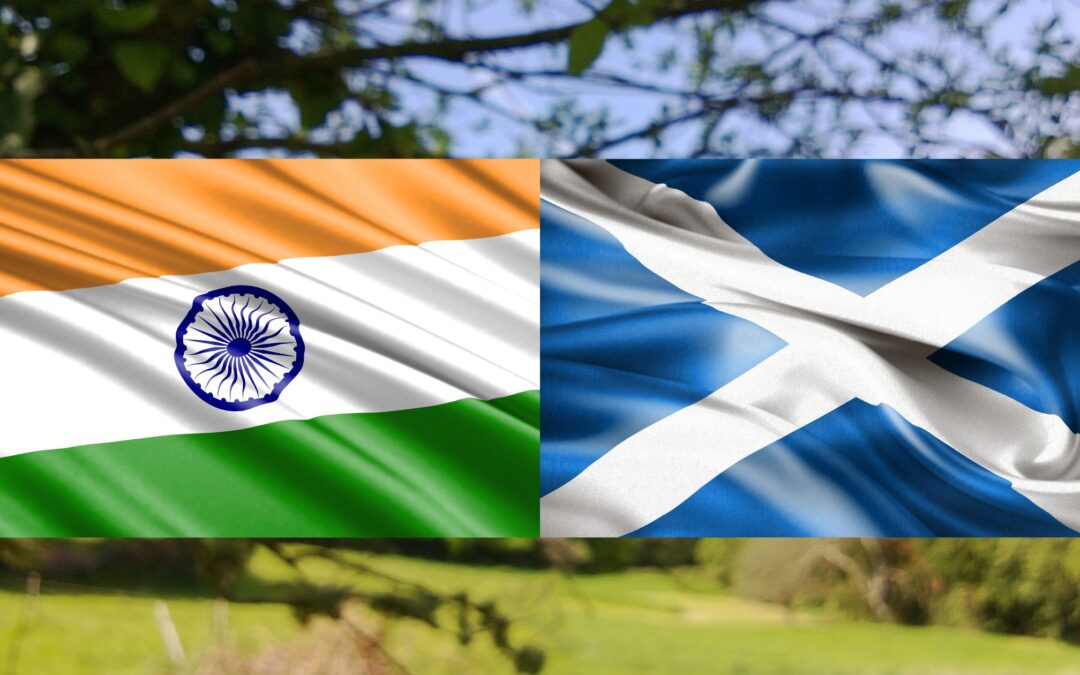
India and Scotland: A Relationship Spanning Four Centuries

India and Scotland: A Relationship Spanning Four Centuries

Being of Indian heritage and having lived in Scotland for the majority of my life, I have experienced first-hand, the long and intertwined history of these two wonderful nations.

Indo-Scottish ties date back nearly four centuries to 1618 when there was a speculative effort to create a Scottish East India Company but it wasn’t until the 1660s, that the Scots began increasing their activity along the trade routes to India, Africa, and China.

By the 18th century, Scottish sailors came to be regarded as reliable seamen and actively engaged in coastal trading in India, trying to find ways to join the Dutch East India Company. It was during this time that Scots began migrating to India in large numbers as East India Company military, medical, and maritime staff and as free merchants.

Today, Scotland is home to approximately 33k citizens of Indian heritage and with Glasgow named “Curry Capital of Britain” more times than any other city in the UK, it is clear that Scots have not only welcomed Indians into their communities but also share a love of Indian cuisine.

India has always been a priority partner for international engagement as Scotland continues on its path of sustainable economic growth, as we at PG Paper know well. Scotland’s strengths in education, energy, and India’s position as the world’s largest democracy, with an unrivalled youth demographic, may allow both countries to achieve their economic goals. In fact, one quarter of the global labour force will be Indian by 2030.  That’s not surprising if you pay attention to India’s young ambitious workforce and the country’s spirit of entrepreneurship and creativity.

Scotland has created an International Framework, with four strategic objectives aligning with India’s priorities:

Objective 1 – Global Outlook: Trade and Investment

This strategic objective of a global outlook underscores Scotland’s ambitions to support more companies to do business in India, increase Scottish exports to India, seek more high-value investments from India into Scotland, and encourage greater talent and knowledge partnership between the two countries.

In a recent interview with the Business Standard, Robert Taylor, a senior spokesman for the Scottish government in Edinburgh, commented: “India is an increasingly important market for Scotland and is identified as one of the top 20 countries for export growth.”

One might be surprised to learn that Indians buy the most whisky in the world. Scotch whisky is a significant attraction for Indian consumers despite the 150% duty on imports by India. In 2021, India is projected to earn over £16 million in revenue from the whisky sold in the country.

India is in fact the eleventh largest inward investor in Scotland, and this could change if the incentives provided by the UK government and India’s economic outlook enhance outward activity on the part of Indian companies. Some of the top Indian companies like TCS, Genpact, Wipro, Hinduja Global Services Limited, and Piramal already have a strong presence in Scotland, and they continue to grow their businesses successfully. We need to see more Indian companies set up their offices in Scotland.

Objective 2 – Relationships and Partnerships: Education and Skills

The partnership between India and Scotland extends to education and skill-building, with demand for education high in India. Scotland is internationally renowned for its leading higher education system and with the promotion and uptake of education a key tenet of Indian culture, this is an increasingly important area for India and Scotland to focus on. Interestingly, India is Scotland’s fifth-biggest international market for further and higher education students, and as of 2016, sixteen of Scotland’s higher education institutes had academic and research links with Indian universities.

This academic partnership is further highlighted by The Edinburgh India Institute at the University of Edinburgh, which aims to encourage a greater awareness of India in Scotland and to build Scotland’s cultural, business and academic ties with India.

Objective 3 – Reputation and Attractiveness: Energy

India’s large population consumes a lot of energy; the Indian government plans to not only generate an additional 175 GW of renewable energy by 2022 but also build a strategy to transition to more sustainable sources of energy.

Since Scotland is well-positioned to partner with India on energy, we need to see greater collaboration between the Scottish and Indian governments on new and renewable energy technology, and on supporting entrepreneurs from India and Scotland to establish energy businesses. One example of this type of partnership is between Global energy consultants Enzen and Glasgow clean energy tech company Smarter Grid Solutions, who were awarded India’s first Active Network Management (ANM) contract.

I’m keen to see how Scotland boosts its profile as a renewable energy powerhouse to economically benefit both countries.

Objective 4 – Culture, Heritage and Tourism

I can’t write about India and not mention Bollywood. Since 1998, over 20 Bollywood films have been shot in Scotland, including the latest blockbuster Bell Bottom. My wife and I were instrumental in facilitating the filming of this movie in Scotland. We convinced the film’s producer Vashu Bhagnani that Scotland offered everything his film needed.

Bollywood is only one aspect of the strong, long-term cultural cooperation between India and Scotland, indeed Scotland’s three largest cities, Glasgow, Aberdeen and Edinburgh, have hosted annual Mela festivals in the past.

The goal is to build greater awareness of Indian culture in Scotland and establish Scotland as a “must-visit, must-return destination” for key Indian tourist markets. Scotland and India’s distinct and diverse cultures and heritage allow infinite opportunities to build lasting partnerships.  For example, Indian tourists are among the world’s highest spenders per trip made abroad. To fulfil our tourism ambitions, we urgently need direct flights between the two countries. I’m hoping the anticipated visit to Scotland from Prime Minister Modi for the UN Climate Change Conference, COP26, will prove to be a great catalyst to explore these opportunities in depth.